
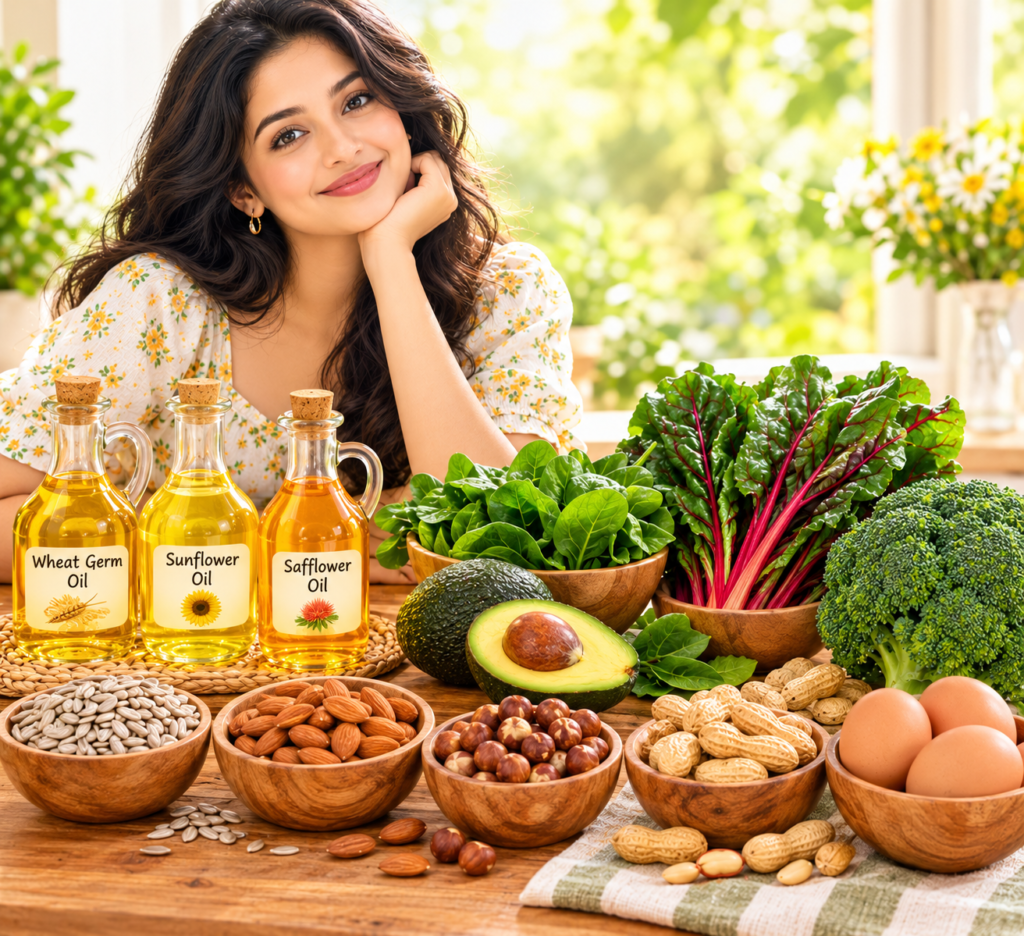
Vitamin E is one of the body’s most important antioxidant nutrients. While it is widely recognized as a common ingredient in skincare products and anti-aging creams, its role extends far beyond beauty. Research shows that vitamin E helps protect cells from oxidative damage, supports immune function, promotes healthy skin, and contributes to overall well-being.
Why Vitamin E Is Important for Your Health
Oxidative stress contributes to aging and numerous chronic diseases, including cardiovascular disease, neurodegenerative disorders, diabetes complications, and certain cancers.
Vitamin E helps counteract this process by protecting cell membranes and reducing oxidative damage.
Research shows that vitamin E contributes to:
- Healthy immune system function
- Maintenance of healthy skin
- Protection of cell membranes
- Normal blood vessel function
- Regulation of inflammatory processes
- Protection against oxidative stress
Below are some science-backed benefits of vitamin E, its best dietary sources, signs of deficiency, skincare applications, recommended intake, and important precautions.
10 Research-Backed Health Benefits of Vitamin E
1. Powerful Antioxidant Protection
Vitamin E is one of the body’s major fat-soluble antioxidants. It neutralizes free radicals before they damage cell membranes, proteins, and DNA.
Oxidative stress has been linked to aging and many chronic diseases. Vitamin E is recognized as a major chain-breaking antioxidant protecting polyunsaturated fatty acids within cell membranes.
2. Supports a Healthy Immune System
Vitamin E helps immune cells function efficiently and supports both innate and adaptive immunity.
Studies indicate that adequate vitamin E intake may improve immune responses, especially in older adults whose immune function naturally declines with age.
Research also suggests improved antibody responses following vaccination in some populations.
Research Source: NIH Office of Dietary Supplements
3. Helps Protect Skin from Oxidative Damage
One of vitamin E’s best-known benefits is its ability to protect the skin.
It works by:
- Reducing oxidative damage
- Supporting the skin barrier
- Protecting skin lipids
- Helping reduce UV-induced damage
Although sunscreen remains essential, vitamin E is commonly included in dermatological formulations because of its protective antioxidant properties.
Research Source: Thiele JJ et al. British Journal of Nutrition
4. May Help Slow Skin Aging
Oxidative stress accelerates collagen breakdown and contributes to wrinkles and fine lines.
Topical vitamin E may help:
- Improve skin hydration
- Reduce roughness
- Support skin healing
- Minimize signs of premature aging
Evidence is stronger when vitamin E is combined with other antioxidants such as vitamin C.
5. Supports Brain Health
Researchers have investigated vitamin E for its potential role in slowing cognitive decline because oxidative stress contributes to neurodegenerative diseases.
Some observational studies have found that higher vitamin E levels are associated with a lower risk of Alzheimer’s disease, although clinical trial results remain mixed.
Vitamin E should not be considered a treatment for Alzheimer’s disease without medical guidance.
6. Helps Protect Cell Membranes
Every cell membrane contains fats that are vulnerable to oxidation.
Vitamin E helps stabilize these membranes, preserving normal cell function throughout the body.
This protective role is particularly important for:
- Brain cells
- Muscle cells
- Red blood cells
- Immune cells
Research Source: NIH Office of Dietary Supplements
7. Supports Healthy Blood Vessel Function
Vitamin E has been shown to influence platelet aggregation and blood vessel function.
However, current evidence does not support taking high-dose vitamin E supplements solely for preventing heart disease.
Obtaining vitamin E through a balanced diet remains the preferred recommendation.
Research Source: American Heart Association & NIH Office of Dietary Supplements
8. May Reduce Inflammation
Vitamin E possesses anti-inflammatory properties by helping regulate inflammatory pathways associated with oxidative stress.
This may contribute to healthier aging and better cellular protection.
Research Source: Traber MG, Atkinson J. Free Radical Biology & Medicine
9. Supports Eye Health
Vitamin E is one of the antioxidants included in the AREDS and AREDS2 eye health formulations.
Research suggests these combinations may slow the progression of age-related macular degeneration (AMD) in people at high risk.
Vitamin E alone is not sufficient for eye disease prevention.
Research Source: National Eye Institute
10. Prevents Vitamin E Deficiency
Although deficiency is uncommon in healthy adults, it can occur in people with fat-malabsorption disorders or rare genetic conditions.
Vitamin E deficiency may lead to:
- Muscle weakness
- Difficulty walking
- Poor coordination
- Peripheral neuropathy
- Vision problems
- Impaired immune function
Research indicates that severe untreated deficiency can cause long-term neurological damage.
Best Natural Food Sources of Vitamin E
Most people can obtain sufficient vitamin E through a healthy diet.
Excellent sources include:
| Food | Vitamin E Content |
| Sunflower seeds | Very High |
| Almonds | High |
| Hazelnuts | High |
| Wheat germ oil | Extremely High |
| Sunflower oil | High |
| Safflower oil | High |
| Avocado | Moderate |
| Spinach | Moderate |
| Swiss chard | Moderate |
| Broccoli | Moderate |
| Peanuts | Moderate |
| Eggs | Small amounts |
Research Source: USDA FoodData Central
Recommended Daily Intake
According to the NIH:
| Age | Recommended Daily Allowance |
| Adults | 15 mg (22.4 IU) |
| Pregnancy | 15 mg |
| Breastfeeding | 19 mg |
Most healthy adults can meet these requirements through diet alone.
Vitamin E Supplementation
Supplements may be appropriate for individuals with medically diagnosed deficiency or certain absorption disorders.
However, routine high-dose supplementation is not recommended for healthy individuals unless advised by a healthcare professional.
The NIH Office of Dietary Supplements notes that excessive supplementation has not consistently shown disease-prevention benefits and may increase certain health risks.
Possible Side Effects of Vitamin E and Precautions
Vitamin E is generally safe when consumed from foods. But excessive supplementation may increase the risk of bleeding and interact with blood-thinning medications. Always follow medical advice regarding supplements.
High-dose supplements may increase the risk of adverse effects, including:
- Nausea
- Stomach cramps
- Fatigue
- Headache
- Diarrhea
- Blurred vision
- Easy bruising
- Increased bleeding risk
Because vitamin E has anticoagulant properties, it may interact with:
- Warfarin
- Aspirin
- Other blood-thinning medications
People taking anticoagulants or preparing for surgery should consult their healthcare provider before using vitamin E supplements.
While vitamin E supplements may benefit individuals with medically diagnosed deficiency, high doses should only be taken under professional supervision due to potential side effects and medication interactions. For most people, prioritizing vitamin E-rich foods remains the safest and most effective way to enjoy its health benefits.
Resaerch References:
- National Institutes of Health (NIH) – Office of Dietary Supplements. Vitamin E Fact Sheet for Health Professionals.
https://ods.od.nih.gov/factsheets/VitaminE-HealthProfessional/ - Traber MG, Atkinson J. Vitamin E, antioxidant and nothing more. Free Radical Biology & Medicine.
https://pubmed.ncbi.nlm.nih.gov/11162952/ - British Journal of Nutrition. Research on dietary vitamin E and skin health.
https://www.cambridge.org/core/journals/british-journal-of-nutrition - National Eye Institute (NIH). AREDS/AREDS2 Eye Disease Studies.
https://www.nei.nih.gov - USDA FoodData Central. Vitamin E content of foods.
https://fdc.nal.usda.gov/ - American Academy of Dermatology. Evidence-based information on skin care and scar treatments.
https://www.aad.org - Harvard T.H. Chan School of Public Health. The Nutrition Source – Vitamin E.
https://nutritionsource.hsph.harvard.edu/vitamin-e/